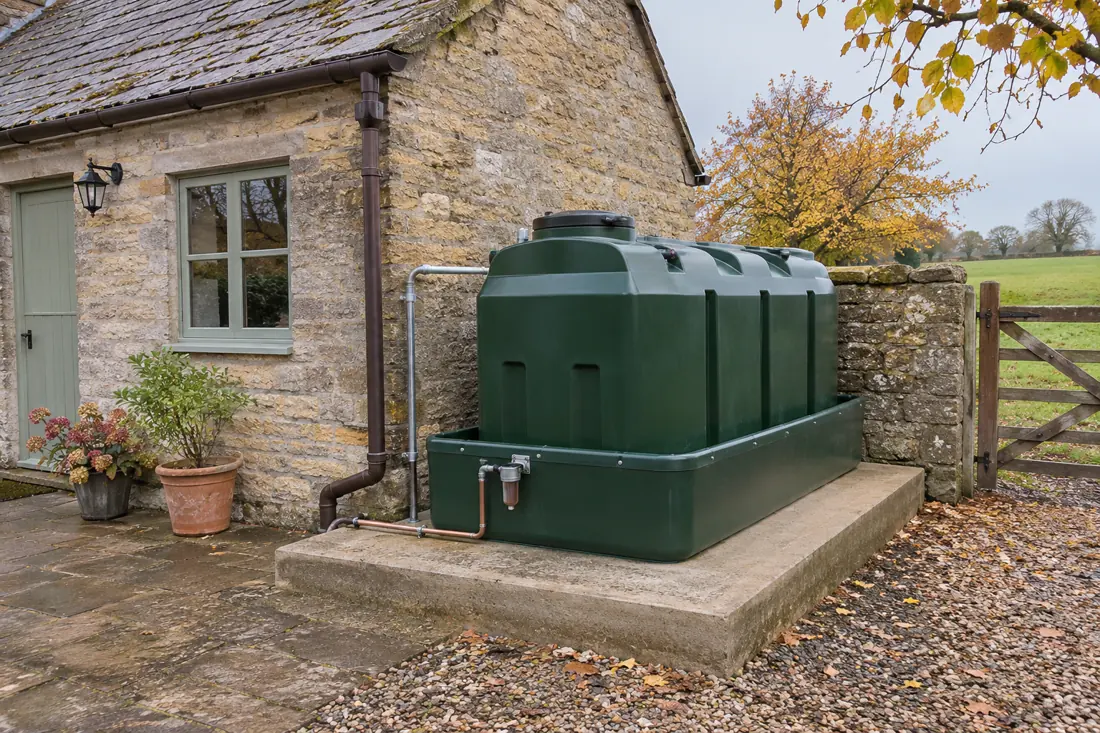
Start With The Reason For Replacement
Cracking or distortion in plastic, corrosion on steel, unreliable fittings and a failing base all deserve assessment. A delivery driver may also have raised concerns, or you may be changing the layout of a garden or farmyard. Explain what prompted the enquiry rather than choosing a replacement solely from the old tank's label.
Replacing like for like is not always the best answer. A similar capacity may have a different footprint and support requirement, and the existing position may no longer suit the property. A suspected active leak should take the leaking tank route first, before routine replacement planning.
Choose Capacity And Position Together
Think about fuel use, delivery habits and how the tank can be inspected. A larger tank is not automatically more practical if it blocks access or makes delivery awkward. Horizontal, vertical and narrow formats can solve different space problems, but the whole installation needs assessing, including its outer containment.
The proposed position should be reviewed for fire protection, neighbouring buildings, boundaries and pollution pathways. Doors, windows, eaves, drains and water supplies all matter. Screening should not prevent access to the tank for inspection or conceal fittings from the person delivering oil.
For a home in England, new and replacement storage must meet Building Regulations. The GOV.UK home oil storage guide explains the installation approval route and when a bund is required. The installer should assess the actual location rather than rely on a photograph of a neighbouring tank.
Agree The Complete Changeover
A useful quotation separates tank supply, delivery, old tank removal, fuel handling, base work and connection. Ask whether the oil line, fittings and fire protection need replacement. Reusing a base or pipe is a decision about condition and compatibility, not an automatic saving.
The sequence normally involves isolating the supply, recovering remaining oil, preparing the support and placing the new vessel. Connection, checks and return to service follow once the installation is ready. The contractor should explain what access is needed inside the property and who must be present.
Do not plan around an assumed single-day changeover. A new concrete base, altered position or difficult handling route can extend the programme. Ask about the expected heating interruption and whether temporary storage or a temporary supply is feasible, suitable and separately priced.
What Happens To The Oil?
Tell us the approximate amount remaining and whether there have been water or filter problems. Recoverable fuel can often be held during the work and transferred after assessment. Sludge, water and oil unsuitable for reuse need a different route and should not be pumped into the new tank indiscriminately.
If a delivery is already booked, mention its date before ordering more oil into a questionable tank. There must be adequate safe capacity when the new installation is filled. Confirm the usable quantity and any refill arrangements with the contractor rather than relying only on the old gauge.
A Quote Checklist For Wiltshire Properties
Photograph the existing tank from several sides, the base and the route in from the road. Add the capacity label if readable and a wide view of the proposed position. Narrow gateways, stone walls, steps, soft ground and overhead cables can affect delivery or removal even when the tank itself looks straightforward.
For farms, identify whether the fuel serves the farmhouse, agricultural equipment or another business use. Those uses can fall under different storage guidance. Commercial enquiries should also explain operating hours, equipment that cannot lose supply and any permit-to-work arrangements.
Cost follows the tank specification, containment, ground preparation, pipe length, access equipment and fuel handling. Relocation, landscaping and removal of the old base add work. Ask for exclusions and arrangements for unexpected damaged pipework to be stated before accepting a price.
Handover And Ongoing Care
Keep the manufacturer's information and warranty terms, commissioning details and applicable Building Regulations compliance evidence. Ask which installation records will be supplied and how the notification route is being handled. Our installation guide explains these choices in more detail.
After replacement, leave room to see the tank and reach its fittings. Follow the manufacturer's care instructions and arrange competent inspection. Report new staining, unusual fuel loss or distortion promptly, rather than waiting until the next delivery reveals a problem.
Oil Tank Replacement Questions
Can The Existing Base Be Reused?
An existing oil tank base can be reused only if its condition, dimensions and support suit the new tank. A tank with similar capacity may still need different support. Include photographs showing the slab edges and any cracking, settlement or raised supports so the quote can allow for the right preparation.
Will Replacement Interrupt My Heating?
Oil tank replacement requires an interruption while the supply is disconnected and the new installation is checked. The length depends on the agreed work, including base preparation and pipe changes. For a longer project, ask whether a temporary supply can be assessed and priced, particularly where heating supports vulnerable occupants or business operations.
Start With Your Tank.
Send the postcode, what has prompted the work and the access details. We will use your enquiry to help identify a suitable service provider.
Send The Details