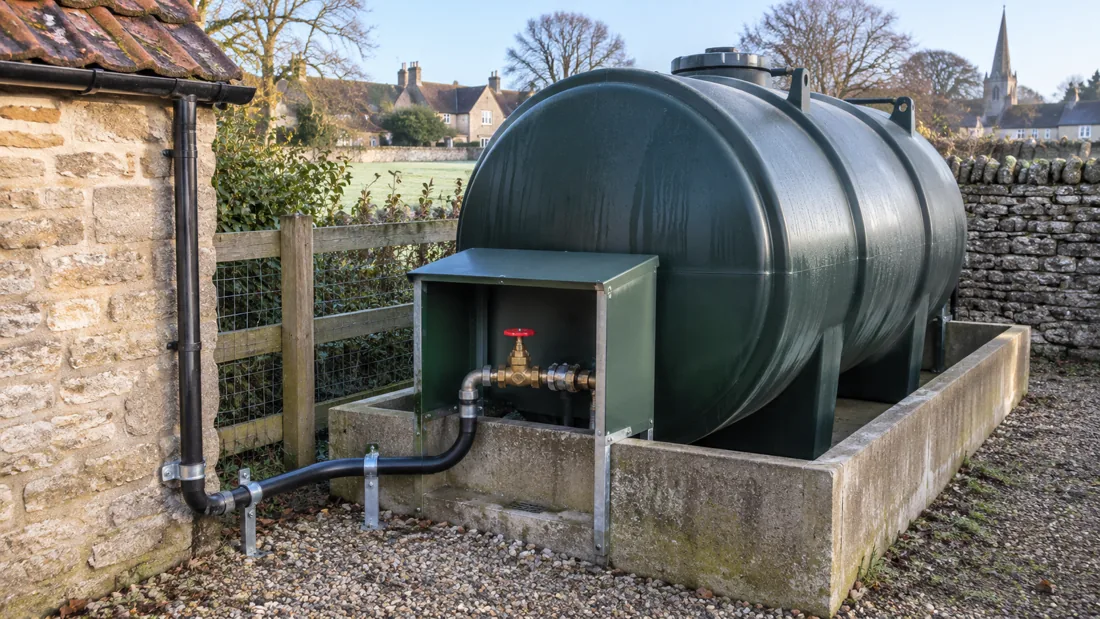
If A Leak Is Happening Now
Keep people and pets away from the affected area and avoid contact with oil. Do not hose a spill away or use detergent, since this can spread contamination into drains and ground. Do not try to repair a split tank, transfer fuel yourself or enter a tank to investigate.
Follow the safety advice on the tank's spill sticker where it is safe to do so. Government guidance for home oil storage advises getting help from your insurer, the Environment Agency and your oil supplier rather than attempting a clean-up yourself. Where oil threatens water, use the official environmental reporting route promptly.
Our web form is for enquiries and is not an emergency reporting channel. Do not wait for a reply before reporting pollution. If the situation puts anyone in immediate danger, contact the appropriate emergency services.
Recognise What Needs Investigating
A strong oil smell, fresh staining, oily water or an unexplained drop in the gauge can indicate a leak. Distorted plastic, corroded seams and damaged supports are other reasons for concern. Levels can change for other reasons, so the cause needs checking.
The vessel is only one possible source. Valves, filters, joints and buried supply lines can also lose fuel. Describe where staining appears without disturbing soil or exposing pipework.
Tenants should notify their landlord or managing agent promptly. Businesses should alert the person responsible for the site and follow their incident procedures. Record when the problem began and subsequent changes.
Stabilise, Recover And Assess
Professional attendance begins with assessing immediate risks and controlling further loss. The contractor may need to isolate the affected system and recover remaining fuel into suitable holding storage. Access, containment space and the amount left in the tank all affect what equipment is appropriate.
Recoverable oil needs to be kept separate from contaminated water, sludge and spill material. A damaged tank should not receive another delivery while its condition is unresolved. Tell the supplier if a delivery is due and ask the attending contractor how the supply should be managed.
The next stage is to establish whether the problem is confined to a fitting or involves the tank structure or ground. Cracked plastic generally leads to replacement assessment rather than a patch presented as a permanent solution. Steel and pipework defects also need individual judgement, since repair suitability depends on the actual damage.
A New Tank Does Not Resolve Contaminated Ground
Replacing the failed vessel addresses storage, but escaped oil may have travelled beneath paving or through drainage. The visible stain may hide wider contamination. Investigation may require sampling and specialist environmental advice before a clean-up method can be defined.
Contact your insurer early and ask what evidence or approval is needed before substantial remediation. Cover and exclusions differ, so do not assume tank replacement, lost fuel and environmental investigation are all included. Keep photographs, inspection records, delivery dates and contractor reports together.
For a buried installation, use the underground tank guide alongside the incident assessment. Filling an old tank does not treat an existing plume of oil. Any decision to leave equipment underground needs to account for both its condition and the surrounding environmental risk.
Information And Access For The Enquiry
If photographs can be taken safely from a clean area, show the tank, visible damage and nearby drains or ditches. Give the postcode, approximate fuel level, tank material and when the problem began. Explain whether oil is still visibly escaping and whether the smell is inside an occupied building.
Describe the route from the road, parking, narrow gates, steps and any ground that equipment must cross. On farms, identify livestock movements and separate farmhouse heating from operational fuel storage. Commercial sites should mention isolation permissions, opening hours and any critical equipment supplied by the system.
Costs depend on remaining fuel, recovery access, replacement requirements and the extent of contamination. Waste classification, testing, excavation and reinstatement can make incident costs very different from a routine tank replacement. Agree the immediate scope and the process for authorising further work as findings develop.
After The Immediate Problem
Ask for a record of the source found, actions taken and materials removed. Applicable waste transfer or hazardous waste consignment records should reflect the actual waste streams. Where ground has been investigated or removed, retain the findings and disposal details for your insurer and property records.
Before the supply returns to normal, confirm what has been repaired or replaced and what still needs attention. If temporary storage is proposed, ask about its siting, monitoring and removal. Follow through on inspection and maintenance advice so a deferred defect is not forgotten once the heating works again.
Leaking Oil Tanks Questions
Is A Strong Smell Always A Tank Split?
A strong oil smell does not always mean the tank has split, but it does need investigation. A valve, joint, filter or buried supply pipe may be responsible. Record where the smell is strongest and any visible staining from a safe position, and seek appropriate help without digging or dismantling equipment.
Will A New Tank Solve The Whole Incident?
A new oil tank can replace the failed storage vessel, but it does not remove oil already in soil, drains or groundwater. The incident may need separate investigation and remediation. Ask for the replacement work and environmental work to be scoped distinctly, with findings and records retained for your insurer.
Start With Your Tank.
Send the postcode, what has prompted the work and the access details. We will use your enquiry to help identify a suitable service provider.
Send The Details