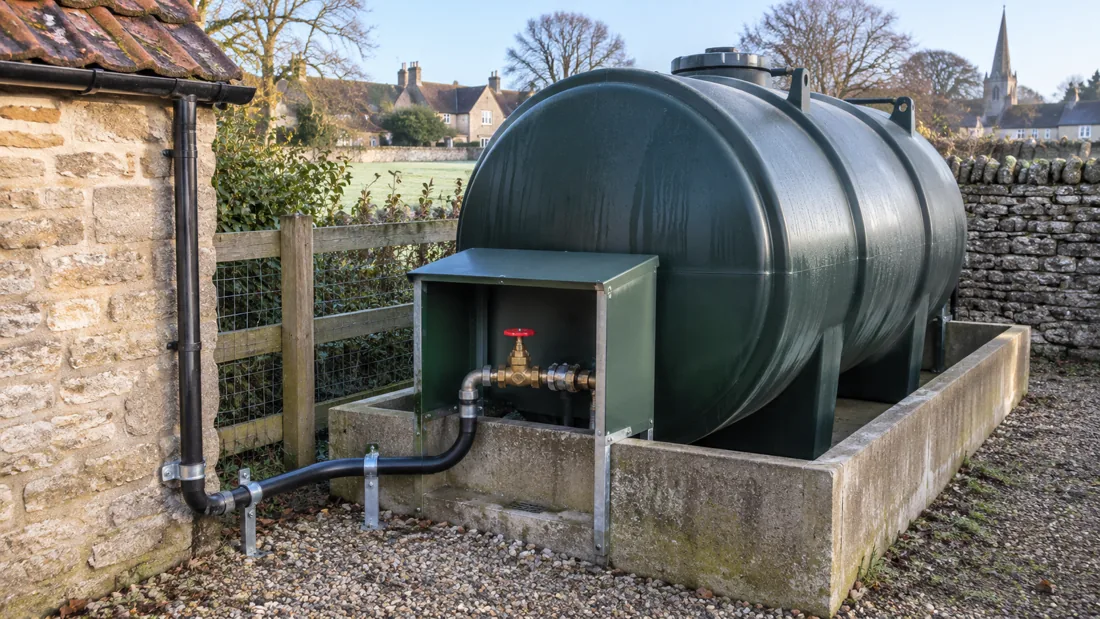
Specify The Use Before The Tank
A new installation starts with what the tank will supply. Heating a house, fuelling agricultural machinery and supporting a commercial generator create different demands. Tell us the fuel type, likely use and whether this is a new system, an extra tank or a new location for existing storage.
Capacity needs to suit consumption and delivery arrangements while leaving room for inspection and safe access. Choosing a vessel first and looking for a space afterwards can lead to avoidable base or pipework changes. If you already have a tank to retire, our replacement guide covers the changeover as well as installation.
Assess The Position On The Ground
The assessment should consider nearby buildings and openings, boundaries, combustible structures and the route a spill could take. A flat-looking corner can still drain towards a ditch or gully. Identify private wells, boreholes and springs, including those beyond the immediate garden boundary where known.
Deliveries need a practical fill arrangement, and the person filling the tank must be able to carry out the necessary checks. The location should also allow inspection without climbing over walls or squeezing behind the tank. Think ahead to extensions, sheds and vehicle movements that could change the risks.
A protected landscape or historic property can add planning considerations. Do not assume either that every installation needs planning permission or that none does. Where the proposal affects a listed building, its setting or protected features, establish the appropriate advice before excavation or construction starts.
Containment And The Approval Route
An outer bund is intended to contain an escape from the inner tank. The domestic assessment considers capacity and pollution risk, while commercial and agricultural uses need their own checks. A single-skin tank should not be selected simply because it costs less or resembles the old installation.
Approved Document J provides Building Regulations guidance relevant to domestic fuel storage, including fire and pollution protection. For home installation, confirm whether a registered competent person will self-certify the work or whether a separate Building Control route is needed. Registration should be checked for the contractor undertaking the work.
For businesses, use the business oil storage guidance to establish applicability and exceptions. Agricultural fuel can fall under the agricultural fuel oil rules. A farmhouse and a working farm tank should not be treated as interchangeable uses.
Base, Pipework And Delivery
A tank needs continuous support or another support arrangement specified for that model. The base must be stable, level and suitable for the full installation, including containment. Existing paving is not evidence that the ground or construction will support a filled tank.
The pipe route needs protection from damage and sensible access for maintenance. Discuss crossings, buried sections and the entry to the building before the route is fixed. Connections and safety controls belong in the installer's design and checks, rather than being left as unpriced finishing work.
Tell us about the delivery route from the public road to the final position. Gate width alone is not enough if a long tank must turn around a corner. Steps, restricted headroom, weak covers, soft verges and slopes can change the handling method and equipment.
Information That Makes A Quote Useful
Send your postcode, the appliance or equipment to be supplied, fuel type and any proposed tank capacity. Include photographs across the intended position and along the access route. A simple sketch showing buildings, drains, boundaries and the proposed pipe route is useful, even without precise survey measurements.
If there is existing fuel to retain, say where it is stored and give an approximate quantity. Transferring it needs suitable storage and a quality check, and the new tank should not receive contamination from an old system. If no fuel is present, agree who will arrange the first delivery and when it is safe to do so.
The main cost drivers are tank specification, containment, base construction, pipe distance and handling access. Commercial controls, ground investigation or changes to the proposed location can add work. Ask which items are provisional and which details require a site visit before the price is confirmed.
Completion Is More Than Placement
Before the system is accepted, agree the checks, operating explanation and documentation needed. Keep model details, manufacturer instructions, warranty terms and the relevant installation and compliance records. Waste documentation only applies where materials have actually been removed.
Make sure the person responsible for the property knows the fill point, normal inspection access and how faults should be reported. Avoid storing materials against the new tank. Record future changes around it, because an extension or altered driveway can affect an otherwise suitable installation.
Oil Tank Installation Questions
Which Tank Shape Is Best?
The best oil tank shape depends on capacity, available footprint and access for installation, inspection and delivery. A narrow tank can help in a restricted space, but it still needs suitable support and separation. Ask for the whole layout to be assessed before choosing between horizontal, vertical and slimline formats.
Who Handles Building Regulations?
Building Regulations for a home oil tank installation can be handled through an appropriate registered competent person or a separate Building Control route. Confirm the route and expected records before booking. A product warranty and an installation invoice do not, on their own, establish that the required compliance notification has been completed.
Start With Your Tank.
Send the postcode, what has prompted the work and the access details. We will use your enquiry to help identify a suitable service provider.
Send The Details