When Removal Makes Sense
An old oil tank can outlast the heating system it supplied. If you are changing heating, preparing a property for sale or making room for building work, a removal should deal with the tank, its contents and the connections together. A tank that looks empty can still contain sludge and fuel residues.
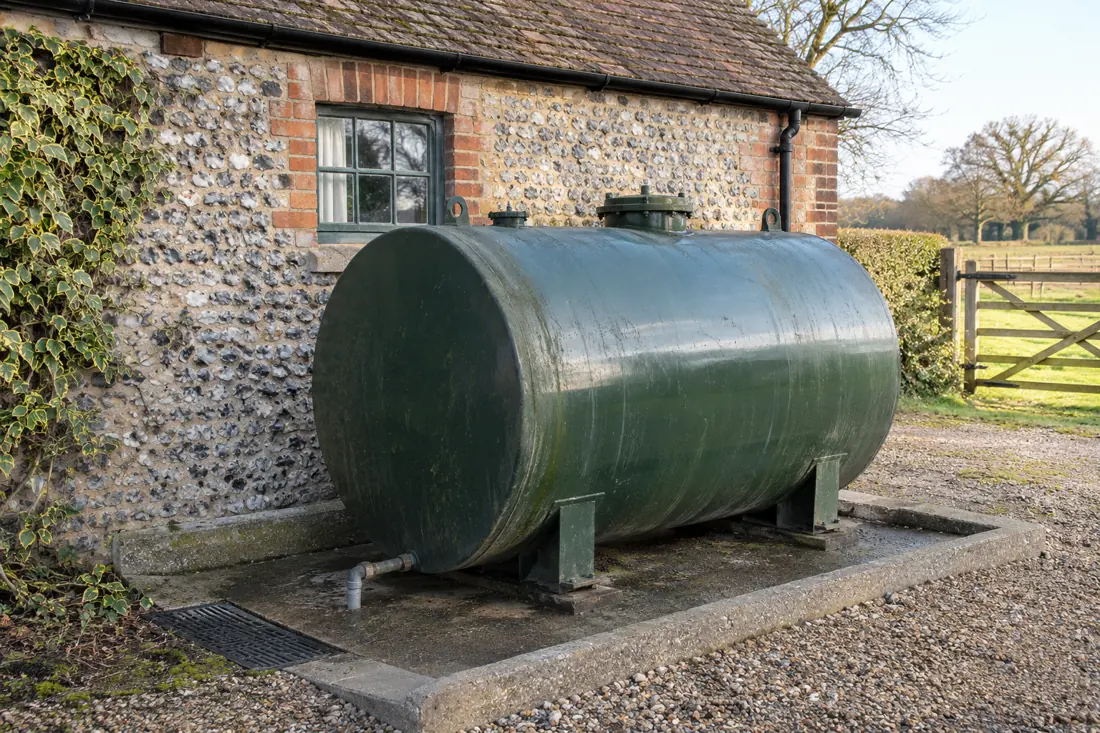
For a garden tank, the first decision is whether it can leave whole after draining and cleaning. A restricted route may mean dismantling it in controlled sections. A basement tank needs a different handling plan, while a buried tank belongs in our underground tank assessment route before any excavation is agreed.
Decide What Must Go
Tell us whether you want only the vessel removed or the complete redundant installation cleared. The base, brick supports, supply pipe and remote fill point may each need separate work. Leaving a fill connection that no longer serves a tank can create a risk of mistaken delivery, so its treatment belongs in the scope.
If another appliance still uses oil, confirm which tank and pipework supply it. Shared systems, connected tanks and uncertain pipe routes need checking before isolation. If you actually need an ongoing oil supply, replacement may be the more useful starting point than a removal-only quotation.
How A Removal Is Planned
First comes an assessment of the construction, condition, contents and route out. The work plan then sets out professional isolation, fuel recovery, cleaning and the chosen handling method. Cutting is a specialist operation, even when a vessel has been out of use for years.
The method must control residue and vapour risks before dismantling. A tank should never be treated as safe simply because the gauge reads empty. Entry also needs separate assessment, with HSE confined-space guidance favouring work from outside wherever possible.
Once the tank is removed, the agreed redundant connections are made safe. The area can then be checked for staining or signs of past leakage. Removing the vessel does not by itself remediate contaminated ground, which may need investigation and a separate quotation.
Keep Usable Fuel In The Plan
Give an approximate gauge reading rather than trying to empty the tank yourself. The contractor needs enough holding capacity and a suitable transfer route. Fuel quality matters as much as quantity, since water and sediment can make part of the contents unsuitable for reuse.
Where there is another suitable tank, a transfer may be possible after assessment. Otherwise, recovery or disposal must be agreed in advance. Do not assume a fuel credit, free removal or a particular disposal charge until the quote explains what happens to each material.
Access And Cost Drivers
Send photographs of the whole tank, its supports, valves and route to the road. Include the narrowest gate, any steps, tight turns and overhead restrictions. Explain whether a vehicle can stand on private hard ground and whether lawns, shared passages or neighbouring land are involved.
Price depends on tank size and material, remaining liquid, cleaning needs and whether lifting or sectioning is needed. Removing a base, tracing buried pipes and restoring paving are separate cost drivers. On a farm or commercial site, inductions, isolation permissions and keeping delivery routes open can also affect the work programme.
Ask for the quotation to state its assumptions about access and contents. If photographs cannot establish a safe method, a visit may be needed before the price is firm. Agree responsibility for clearing stored items and protecting surfaces before the appointment.
Records Worth Keeping
Ask for a completion record identifying the tank and what was removed, plus the applicable waste documentation. Waste oil, contaminated liquids and cleaned metal or plastic may require different classifications and routes. The government hazardous waste guidance explains why classification matters.
A gas-free record applies only where the work and testing call for it. It is not a substitute for evidence of lawful disposal. Keep the agreed scope, photographs and final records with the property file, especially where future buyers may ask about an old installation.
Oil Tank Removal Questions
Can A Tank Come Out Through A Narrow Gate?
A narrow gate does not automatically prevent oil tank removal. Once the contents and hazards have been assessed, controlled dismantling may provide an alternative to lifting the tank whole. Send the gate width, photographs of turns and details of steps so the removal method can be assessed before a booking is agreed.
Does Removal Include The Concrete Base?
Oil tank removal includes base removal only when the quotation says so. Some owners keep a sound slab for another use, while others want the whole footprint cleared. Tell us whether you need supports, paving, buried lines and the remote fill connection removed, and what finish you expect afterwards.
Start With Your Tank.
Send the postcode, what has prompted the work and the access details. We will use your enquiry to help identify a suitable service provider.
Send The Details